Maintaining a Haogenplast pool is simple – when you know what to do. Unlike traditional plaster pools, reinforced PVC membranes require a different approach to keep their look, durability, and performance over time.
This guide will walk you through the essential steps to keep your pool clean, balanced, and looking its best – with minimal effort and maximum results.
Watch our Professional Pool Maintenance Guide
Water Treatment Guide
13 Videos
0:16
0:16
0:16
The Chemical Foundation
The pH Anchor
Smart Chlorination
Super-Chlorination
Maintain your pH between 7.2 and 7.6. A balanced pH ensures chlorine efficiency and prevents eye irritation. If pH drops below 7.2, the water becomes acidic, leading to the corrosion of metal fittings and potential fading of the PVC membrane.
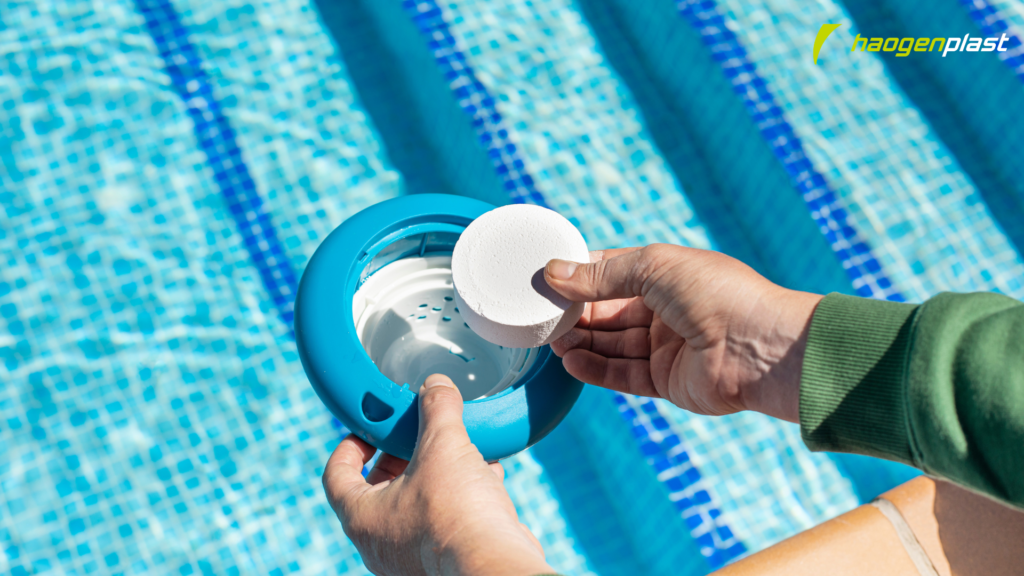
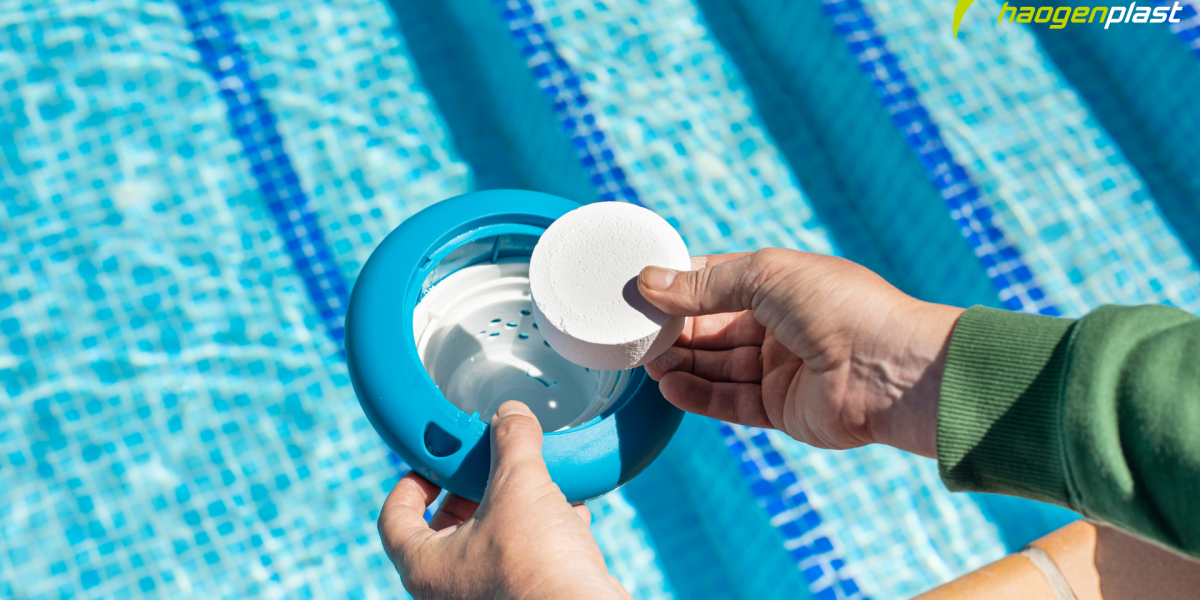
Keep free chlorine between 0.8 and 1.8 ppm for daily operation. Never throw chlorine tablets or granules directly into the pool; concentrated contact will cause permanent discoloration and damage to the PVC membrane.
When facing severe algae or heavy swimmer loads, raise chlorine to 10–20 ppm and lower pH to 5.2 for up to 7 days. This chemical environment is aggressive – swimming is strictly prohibited, and you must use protective gear when handling the necessary hydrochloric acid.
Cloudy Water Diagnostics
Cloudy water is a symptom of high pH, high water hardness, or poor filtration. Before adding more chemicals, test and adjust the pH to 7.2–7.6 and run your filtration continuously for 24 hours.
The pH Anchor
Maintain your pH between 7.2 and 7.6. A balanced pH ensures chlorine efficiency and prevents eye irritation. If pH drops below 7.2, the water becomes acidic, leading to the corrosion of metal fittings and potential fading of the PVC membrane.
Smart Chlorination
Keep free chlorine between 0.8 and 1.8 ppm for daily operation. Never throw chlorine tablets or granules directly into the pool; concentrated contact will cause permanent discoloration and damage to the PVC membrane.
Super-Chlorination
When facing severe algae or heavy swimmer loads, raise chlorine to 10–20 ppm and lower pH to 5.2 for up to 7 days. This chemical environment is aggressive – swimming is strictly prohibited, and you must use protective gear when handling the necessary hydrochloric acid.
Cloudy Water Diagnostics
Cloudy water is a symptom of high pH, high water hardness, or poor filtration. Before adding more chemicals, test and adjust the pH to 7.2–7.6 and run your filtration continuously for 24 hours.
Structural & Environmental Protection
Filtration & Circulation
Stagnant water is a breeding ground for algae and bacteria. Ensure your pump provides a complete water turnover every 4 hours to maintain uniform disinfection and temperature. Proper circulation prevents “chemical hot spots” that could localized wear on the membrane.
Thermal Management
High water temperatures accelerate chemical reactions and can soften the PVC material. While Haogenplast premium membranes can tolerate up to 35°C and ElvaFlex Ultimate up to 37°C, these should be short-term exposures only. Monitor your pool temperature daily and increase circulation if it exceeds 30°C to avoid premature aging.
Pool Cover Safety
While covers are excellent for energy efficiency, they can trap excessive heat and cause chlorine to concentrate at the surface. When using a cover, you must increase water circulation and periodically remove the cover to ventilate the pool, preventing chemical stress and discoloration of the upper membrane layer.
Winter Maintenance
Always keep your pool filled during the winter. The weight and pressure of the water are necessary to keep the PVC membrane stretched and stable, preventing detachment, wrinkling, or structural damage caused by ground pressure.
Filtration Runtime
Never stop your filtration system completely during the off-season. Running the pump for a few hours each week prevents water stagnation, supports even chemical distribution in cold water, and ensures a much easier reopening in the spring.
Filtration & Circulation
Thermal Management
Pool Cover Safety
Stagnant water is a breeding ground for algae and bacteria. Ensure your pump provides a complete water turnover every 4 hours to maintain uniform disinfection and temperature. Proper circulation prevents “chemical hot spots” that could localized wear on the membrane.
High water temperatures accelerate chemical reactions and can soften the PVC material. While Haogenplast premium membranes can tolerate up to 35°C and ElvaFlex Ultimate up to 37°C, these should be short-term exposures only. Monitor your pool temperature daily and increase circulation if it exceeds 30°C to avoid premature aging.
While covers are excellent for energy efficiency, they can trap excessive heat and cause chlorine to concentrate at the surface. When using a cover, you must increase water circulation and periodically remove the cover to ventilate the pool, preventing chemical stress and discoloration of the upper membrane layer.
Winter Maintenance
Filtration Runtime
Always keep your pool filled during the winter. The weight and pressure of the water are necessary to keep the PVC membrane stretched and stable, preventing detachment, wrinkling, or structural damage caused by ground pressure.
Never stop your filtration system completely during the off-season. Running the pump for a few hours each week prevents water stagnation, supports even chemical distribution in cold water, and ensures a much easier reopening in the spring.
Stain Science & Surface Care
Waterline Maintenance
Sunscreen, oils, and environmental debris settle at the waterline. Wipe this area once a week with a soft sponge or microfiber cloth and approved PVC-safe cleaners to prevent permanent staining.
Limescale Stains
Rough, white crusts at the waterline are calcium carbonate crystals. Never use wire brushes or sandpaper, as they destroy the membrane’s protective acrylic coating. Instead, soak a soft cloth in household vinegar or a Vitamin C paste and let the chemistry dissolve the scale.
Iron (Rust) Removal
Brown or orange spots often come from corroded heaters or well water. Treat these locally by applying an ascorbic acid (Vitamin C) paste directly to the stain. Keep chlorine low (0–1 ppm) during this treatment to ensure effectiveness.
Copper Stain Treatment
Turquoise or dark patches usually indicate copper oxidation from algaecides or heat exchangers. Treat these by lowering chlorine to 0 ppm and using citric acid before adding a metal sequestrant to bind the dissolved metals.
Corrosion Prevention
Acidic water (pH below 7.2) dissolves metal components in your pool system. These metals then oxidize and settle on your liner. Keeping your pH stable is your first line of defense against oxidation marks on your membrane.
Algae & Fungi Defense
If you spot green, black, or pink spots, act immediately. Use a super-chlorination procedure and gently scrub the area with a soft brush to remove biofilm without wearing down the membrane.
Waterline Maintenance
Limescale
Iron (Rust) Removal
Sunscreen, oils, and environmental debris settle at the waterline. Wipe this area once a week with a soft sponge or microfiber cloth and approved PVC-safe cleaners to prevent permanent staining.
Rough, white crusts at the waterline are calcium carbonate crystals. Never use wire brushes or sandpaper, as they destroy the membrane’s protective acrylic coating. Instead, soak a soft cloth in household vinegar or a Vitamin C paste and let the chemistry dissolve the scale.
Brown or orange spots often come from corroded heaters or well water. Treat these locally by applying an ascorbic acid (Vitamin C) paste directly to the stain. Keep chlorine low (0–1 ppm) during this treatment to ensure effectiveness.
Copper Stain Treatment
Corrosion Prevention
Algae & Fungi Defense
Turquoise or dark patches usually indicate copper oxidation from algaecides or heat exchangers. Treat these by lowering chlorine to 0 ppm and using citric acid before adding a metal sequestrant to bind the dissolved metals.
Acidic water (pH below 7.2) dissolves metal components in your pool system. These metals then oxidize and settle on your liner. Keeping your pH stable is your first line of defense against oxidation marks on your membrane.
If you spot green, black, or pink spots, act immediately. Use a super-chlorination procedure and gently scrub the area with a soft brush to remove biofilm without wearing down the membrane.